|
Xinyuan Liu I'm a second-year PhD student in Computer Science at Arizona State University, where I'm advised by Ransalu Senanayake in the LENS Lab. Previously, I was a research assistant at Vanderbilt University with Jie Ying Wu, working on multimodal models for surgical robotics. I received my M.S. in Computer Science from Rice University and my B.S. in Software Engineering from Huazhong University of Science and Technology. |

|
ResearchI'm interested in data-efficient learning and reliable embodied AI: how intelligent systems learn useful behaviors and make better decisions from limited data and feedback. My work spans adaptive model selection, imitation and reinforcement learning, and multimodal evaluation of physical and cognitive capabilities. * indicates equal contribution. |
|
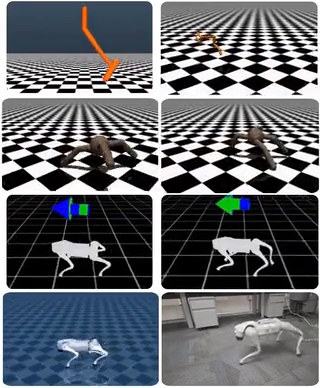
ROOT: Discovering Rewards for User-Specified Embodied Behaviors
Eren Sadikoglu, Aditya Taparia, Xinyuan Liu, Ransalu Senanayake arXiv, 2026 arXiv / bibtex copyReward design cast as an observation-guided search over a tree of reward programs, trained policies, and rollouts, so learned behaviors match what the user asked for, such as natural gait and posture. Evaluated on four embodiments, including a real Unitree Go2. |
|
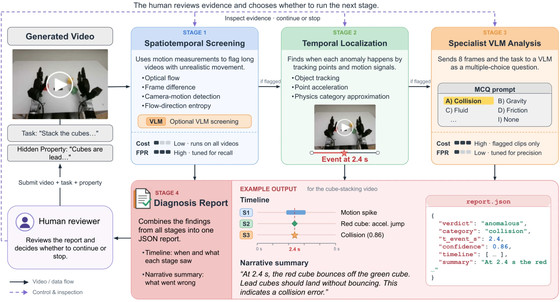
PhysicsLENS: Diagnosing Physical Property Blindness in Video Generation Models
Isaiah Milkey, Som Sagar, Aditya Taparia, Xinyuan Liu, Jiqing Wen, Ransalu Senanayake arXiv, 2026 arXiv / code / dataset / bibtex copyA robotics-grounded benchmark that asks whether video generation models follow a physical property stated in text but hidden from the frame, such as mass or viscosity. Plausible-looking videos often ignore it. |
|
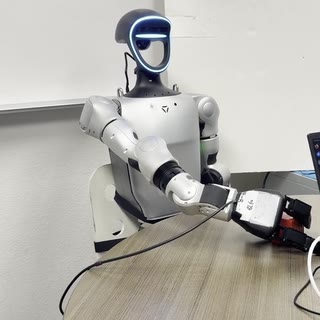
Physical Agentic AI: An Architecture for Orchestrating a Robot Crew with LLMs
Xinyuan Liu, Eren Sadikoglu, Riana Chatterjee, Ransalu Senanayake arXiv, 2026 Abridged version in IROS Workshop on Foundation Models in Multi-Robot Systems, 2026 arXiv / code / video / bibtex copyAn LLM plans for a crew of robots but never actuates them; a procedural orchestrator checks every step against declarative workflow contracts before dispatch. Demonstrated on a Unitree G1 humanoid and Go2 quadruped. |
|
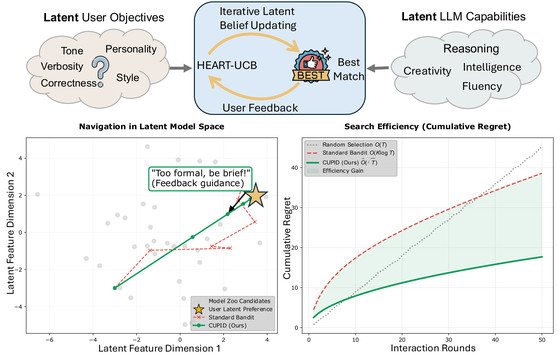
CUPID in the Model Zoo: Online Matchmaking for Selecting Your Dream LLM
Son Nguyen, Xinyuan Liu, Ransalu Senanayake ICML, 2026 arXiv / user study code / bibtex copyA dueling-bandit framework that learns a user's latent preferences from pairwise feedback and matches them to the right LLM under cost and time budgets. |
|
LLM Routing as Reasoning: A MaxSAT View
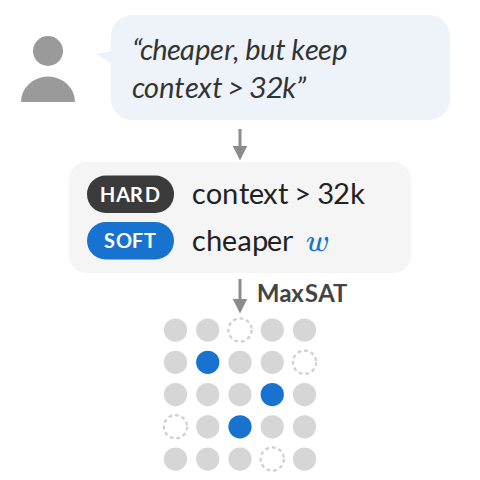
Son Nguyen, Xinyuan Liu, Ransalu Senanayake ICLR Workshop on Logical Reasoning of Large Language Models, 2026 arXiv / bibtex copyLanguage-conditioned LLM routing cast as weighted MaxSAT, where natural-language feedback induces hard and soft constraints over model attributes. |
|
Humanoid Factors: Design Principles for AI Humanoids in Human Worlds
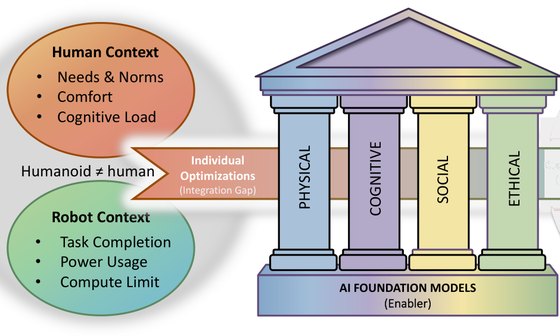
Xinyuan Liu, Eren Sadikoglu, Ransalu Senanayake, Lixiao Huang arXiv, 2026 Abridged version, "Cognitive Models as Evaluation Primitives in Humanoid Factors," in ICLR Workshop on From Human Cognition to AI Reasoning, 2026 arXiv / workshop paper / bibtex copyA framework of physical, cognitive, social, and ethical humanoid factors for designing and evaluating humanoids that share human spaces. |
|
Neural-Augmented Kelvinlet for Real-Time Soft Tissue Deformation Modeling
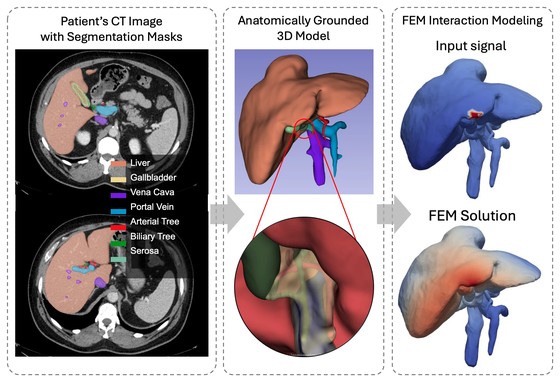
Ashkan Shahbazi*, Kyvia Pereira*, Jon S. Heiselman, Elaheh Akbari, Annie Benson, Sepehr Seifi, Xinyuan Liu, Garrison L. H. Johnston, Jie Ying Wu, Nabil Simaan, Michael Miga, Soheil Kolouri AAAI, 2026 arXiv / paper / code / bibtex copyA physics-informed neural simulator that combines Kelvinlet analytical priors with FEM data for real-time soft-tissue deformation under surgical grasping. |
Miscellanea |
Academic Service |
Reviewer, NeurIPS 2026
Reviewer, CoRL 2026 Reviewer, IROS 2026 Reviewer, WiML Workshop @ NeurIPS 2026 Reviewer, IROS 2026 Workshop |
|
Website template from Jon Barron. |